
Insights Is the Draft London Plan shifting responsibility for designing out crime? At LMS, we ensure that all planning adherence complies with national, regional and local level legislation whether this be the National Planning Policy Framework (NPPF) or a local city plan. Our collaborative approach and relationships with developers and planning authorities ensure that our knowledge of all security related requirements is embedded in our methodology for secure and safe places within accessible realm and buildings alike. Having reviewed the Draft London Plan we note a distinct change in requirement wording; a broader ‘security and safety’ framing. Akin to the draft Design and Placemaking Planning Practice Guidance (PPG), this also focuses on safe public spaces, inclusive environments, good movement networks and treats security as a vital component of good placemaking. Where once key words included DOCOs and Secured by Design, CCTV, Access control, Physical Security, HVM etc. the approach is now widened and softened and focused on safe outcomes, public realm quality, healthy streets (i.e. positively used), community safety, resilience and again, good placemaking. Ensuring the safety of women and girls (VAWG) and inclusivity are very much supported and a significant addition to the former policy. The theme embeds a risk management approach, not on prescribing the exact security functions to be specified but more on how and where this is going to be achieved, based on what research and evidence, and proportionally why, without transferring risk elsewhere, emphasising a ‘designing out crime’ methodology rather than moving the problem elsewhere. Are we witnessing the gradual transfer of responsibility for crime prevention from the police to the planning and development industry? For many years, London planning policy has outlined a relatively clear framework. Policy D11 of the 2021 London Plan explicitly referenced Designing Out Crime, counter-terrorism, physical security, electronic security and consultation with Metropolitan Police Designing Out Crime Officers (DOCOs) and Counter Terrorism Security Advisors (CTSAs). However, the Draft London Plan takes a different approach. Security still exists through Policy MBUL10, and engagement with the Metropolitan Police, CTSAs and other stakeholders remains expected. However, the policy is more concise and excludes specific references as before, and places greater emphasis on creating places that are safe, inclusive and resilient through good design rather than through explicit security interventions alone. Is this a weakening of security policy? No. LMS see this as part of a wider trend that is emerging across planning, spreading responsibility across competent specialists that can advise and embed security strategy and appropriate design solutions within the requirements. And this reflects the same approach we take at LMS. The Draft Design and Placemaking PPG, the National Model Design Code, Healthy Streets principles, VAWG guidance and the London Plan itself are increasingly pushing responsibility for ‘safety outcomes’ towards designers, planners, developers and specialist security consultants. The expectation is no longer simply that developments are secure. The expectation is that developments can clearly demonstrate how safety, security, inclusivity and wellbeing have been considered proportionally and balanced from the earliest stages. Historically, planning authorities and project teams have relied heavily on Police DOCOs to review layouts, challenge designs, identify vulnerabilities and advise on crime prevention through environmental design (CPTED), and to this day do still play a critical role in translating crime prevention principles into practical development advice. At the same time, the role itself has become more specialised, with the NPCC formally designating DOCO as a specialist policing function and recognising its growing importance within prevention-led policing. However, anyone actively working in planning and development knows that public resources are under pressure and this includes policing. Availability of specialist crime prevention input is increasingly stretched and the responsibility of providing crime prevention advice and early planning security needs or crime impact assessments is not new to the security consultant family. As demand continues for new buildings, housing and mixed developments, there is also an increase in legislative compliance and a competent necessity for understanding the technological complexity that has increased around us within the past 10 years including the advancement of integrated electronic security systems, drone adaptability, political and socioeconomic threats and the emergence of AI. So is this just more requirement for security consultants to undertake this work? Yes and no. It is not just a matter of propping up support or completing a tick box exercise, this is about understanding what is being asked to demonstrate compliance. The approach moving forward will require a wider remit and justification. The focus is moving away from individual security features and towards broader questions: Does the place feel safe? Does the design reduce opportunities for crime? Are vulnerable groups able to navigate the space safely? Are hostile threats understood? Has operational security been considered? Is there evidence supporting the design decisions? These are not purely policing questions anymore; they are planning questions and design questions. And increasingly, they are security consultant questions. For security specialists like us at LMS, this presents both a challenge and an opportunity. The challenge is that we can no longer rely solely on traditional security disciplines. Understanding planning policy, urban design, placemaking, public realm design, design coding and legislation such as the Building Safety Act and the Terrorism (Protection of Premises) Act, is becoming just as important as understanding the technicalities of Electronic Security Systems and Hostile Vehicle Mitigation. The opportunity is that security consultants are uniquely positioned to bridge the gap between planning, architecture, operational management and protective security. The Draft London Plan is signalling a future where security is not a specialist add-on or tick box chapter within a Planning Report or Design and Access Statement, it is becoming a fundamental component of placemaking. Early doors consultation with experienced security specialists supporting the journey from the start, including before a premises has even been chosen. As that happens, the responsibility for demonstrating how crime has been assessed, how risks have been mitigated and how safety has been embedded within the design may increasingly sit with specialist security design consultants. If planning policy increasingly requires developments to demonstrate how they have addressed crime prevention, VAWG strategy, public realm safety, terrorism resilience, and operational security, then security consultants will need to take a much greater role in providing that evidence
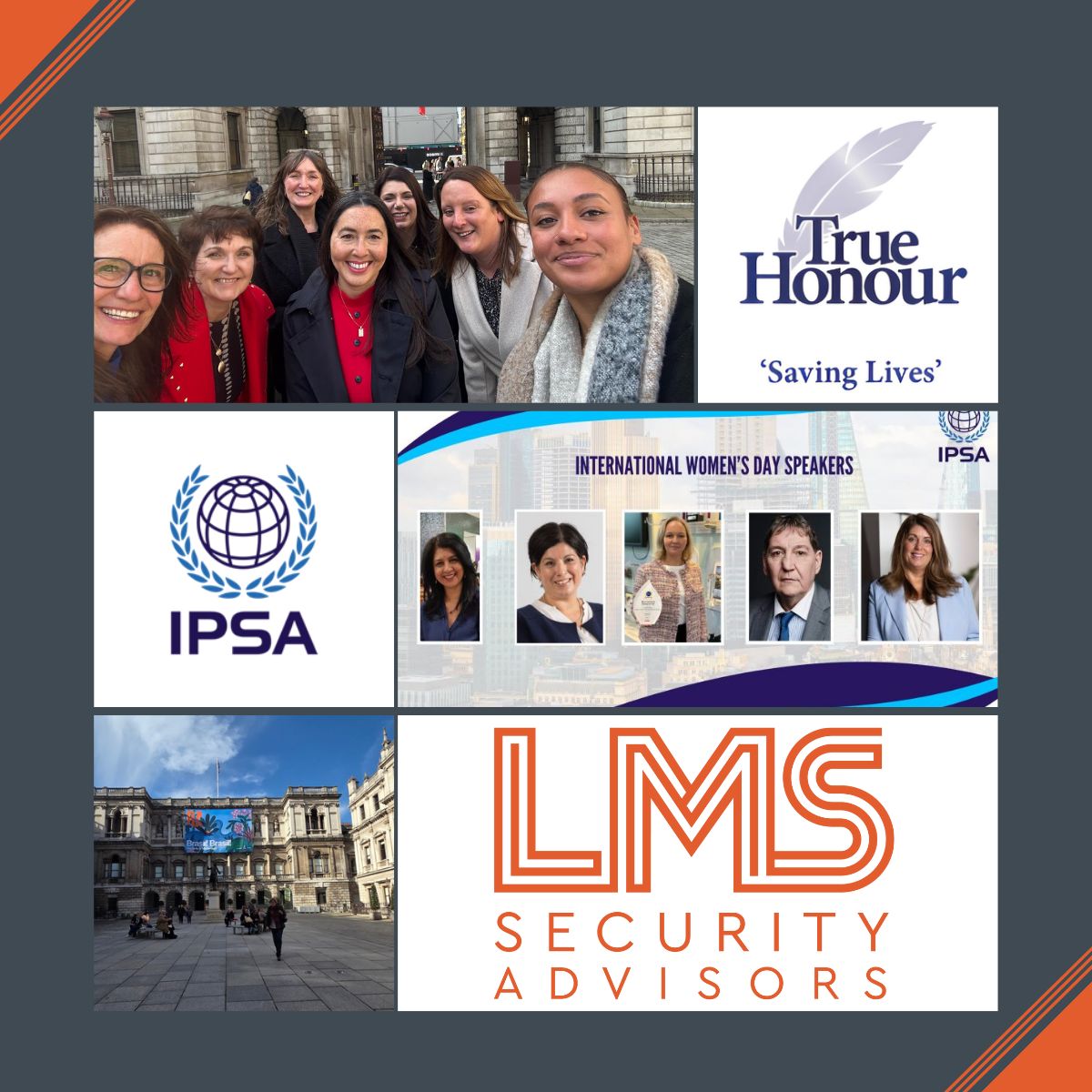
Accelerating Action for Women in Security – Reflections from the IPSA International Women’s Day Event
Insights 16 June 2025 Accelerating Action for Women in Security – Reflections from the IPSA International Women’s Day Event This year, the International Professional Security Association (IPSA) marked International Women’s Day with a powerful call to Accelerate Action—a theme that truly resonated throughout the event. Listening to Sarb Athwal share her harrowing experience was deeply shocking. Her bravery in risking everything to pursue justice for her sister-in-law was nothing short of inspiring. Sarbjit has since dedicated herself to supporting victims of honour-based abuse through her charity, True Honour. Sarbjit introduced everyone to Clive driscoll – Ex-Detective Chief Inspector, Met Police | Deputy Chair & Trustee of True Honour Charity. Clive was thankfully there when she took her one chance to speak out. His actions led to arrests and prison sentences for the perpetrators of this violent crime.If you would like to know more about turning that one chance into change visit True Honour | Support for Honour-Based Violence & FGM Victims in the UK- https://lnkd.in/d3pDwqQ3 It was also incredibly insightful to hear from:Fiona Walters – CEO of G4S UK & Ireland, sharing openly her feelings of imposter syndrome, self -criticism and the importance of advocates who are willing to invest and support others in their career journeys.Colette Black – Director of People Services & Assistant Chief Executive, Essex Fire & Rescue | A champion of leadership, inclusion, and people-first strategies.Maya J. – Executive Director of Business Improvement, Wilson James | A visionary leader driving change in business and operational excellence. Fantastic to meet up with Dawn Dines again, her energy and enthusiasm together with her dedication to the Stamp Out Spiking Campaign continues to be inspirational to all of us here at LMS Security and Global Protect Security. The takeaway message was clear; we don’t need to wait for a formal Diversity & Inclusion Programme to drive change, we already know what needs to be done. All of us, male and female, need to support one another, be braver, do better and create meaningful change. Events like this serve as a vital reminder of the importance of inclusion, equality, and the role of everyone within the security industry to step into action and accelerate gender parity. Let’s hashtag#AccelerateAction together. Previous PostNext Post

Securing logistics – Protecting drivers, vehicles and cargo in transit
Insights 27 August 2022 Securing logistics – Protecting drivers, vehicles and cargo in transit The skills gap remains an issue for those installing fire and security systems, but change is underway. So says Andy Reakes, Head of Growth, Joint Industry Board (JIB) & Electrotechnical Certification Security continues to be a major concern for those operating across supply chain and logistics. According to TAPA, the number of incidents of cargo crime reported for the UK via their Incident Information Service (IIS) in 2020 was 3,100, a 250% increase from 2019, with an estimated total loss to the industry of £77 million. Read the full article here. Scheme (ECS) and Trevor Jenks, National Training Manager at SSAIB. The two were on hand in the Expertise & Guidance Theatre at FIREX International 2022 in May to talk about the changes to the Fire, Emergency and Security Systems (FESS) ECS card and what it means for the sector. Read the full article here. Previous PostNext Post
Evacuation of disabled people – What are the existing legal liabilities responsible persons and fire
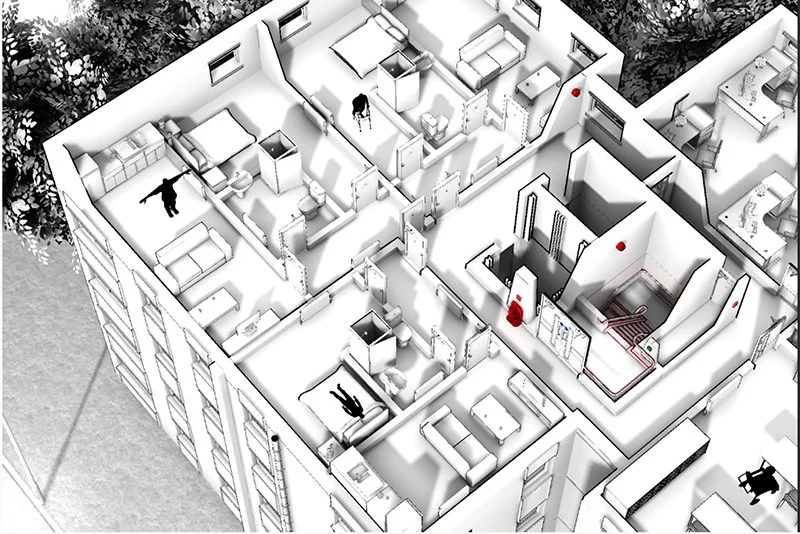
Insights 29 February 2024 Evacuation of disabled people – What are the existing legal liabilities responsible persons and fire Following the events of the Grenfell Tower fire, the subsequent enquiry found that 41% of those who died were disabled, and that there was little to no planning in place for the evacuation of disabled residents. While the Government says it is continuing to consult on the wider issue, Elspeth Grant, Expert PEEPs Advisor at Triple A Solutions, outlines the wider legal liabilities associated with the evacuation planning of disabled people that building owners, safety managers, responsible persons, and all those involved in fire safety need to consider. Read the full article here. Previous PostNext Post

How FESS ECS cards are helping the push for improved competency standards across fire
Insights 29 February 2024 How FESS ECS cards are helping the push for improved competency standards across fire The skills gap remains an issue for those installing fire and security systems, but change is underway. So says Andy Reakes, Head of Growth, Joint Industry Board (JIB) & Electrotechnical Certification Scheme (ECS) and Trevor Jenks, National Training Manager at SSAIB. The two were on hand in the Expertise & Guidance Theatre at FIREX International 2022 in May to talk about the changes to the Fire, Emergency and Security Systems (FESS) ECS card and what it means for the sector. Read the full article here. Previous Post

Is Your Home Or Small Business Built On Secure Foundations? Think Again…
Insights 29 February 2024 Is your home or small business built on secure foundations? Think again… Did you know that the standard router relied upon in homes and by thousands of small businesses is the most frequently attacked IoT device? James Willison, Project and Engagement Manager, IoT Security Foundation, explores the issue and reveals an ongoing initiative from the Foundation that is designed to better secure the devices. Read the full article here. Previous PostNext Post

The Next Evolution Of Smart Buildings, “Security Will Have A Central Role To Play”
Insights 29 February 2024 The next evolution of smart buildings, “Security will have a central role to play” Speaking at Facilities Show in May, co-located with IFSEC International, Ozge Celik Russell, Senior Analyst, Omdia, presented on how the smart building market is moving forwards since a pause in investment in the pandemic, adding that security will play a significant part in its evolution. Read the full article here. Previous PostNext Post